Chemical Process Pumps for Reactor Feed, Spray and High-Pressure Duties

Chemical plants use high-pressure, low-flow pumps to feed pressurized reactors, supply spray nozzles and deliver cleaning water at high pressure. The fluid may be corrosive, and its properties can change from batch to batch.

Pitot tube pumps are compared for these services when the required head is high for the flow and steady, non-pulsating delivery is needed.
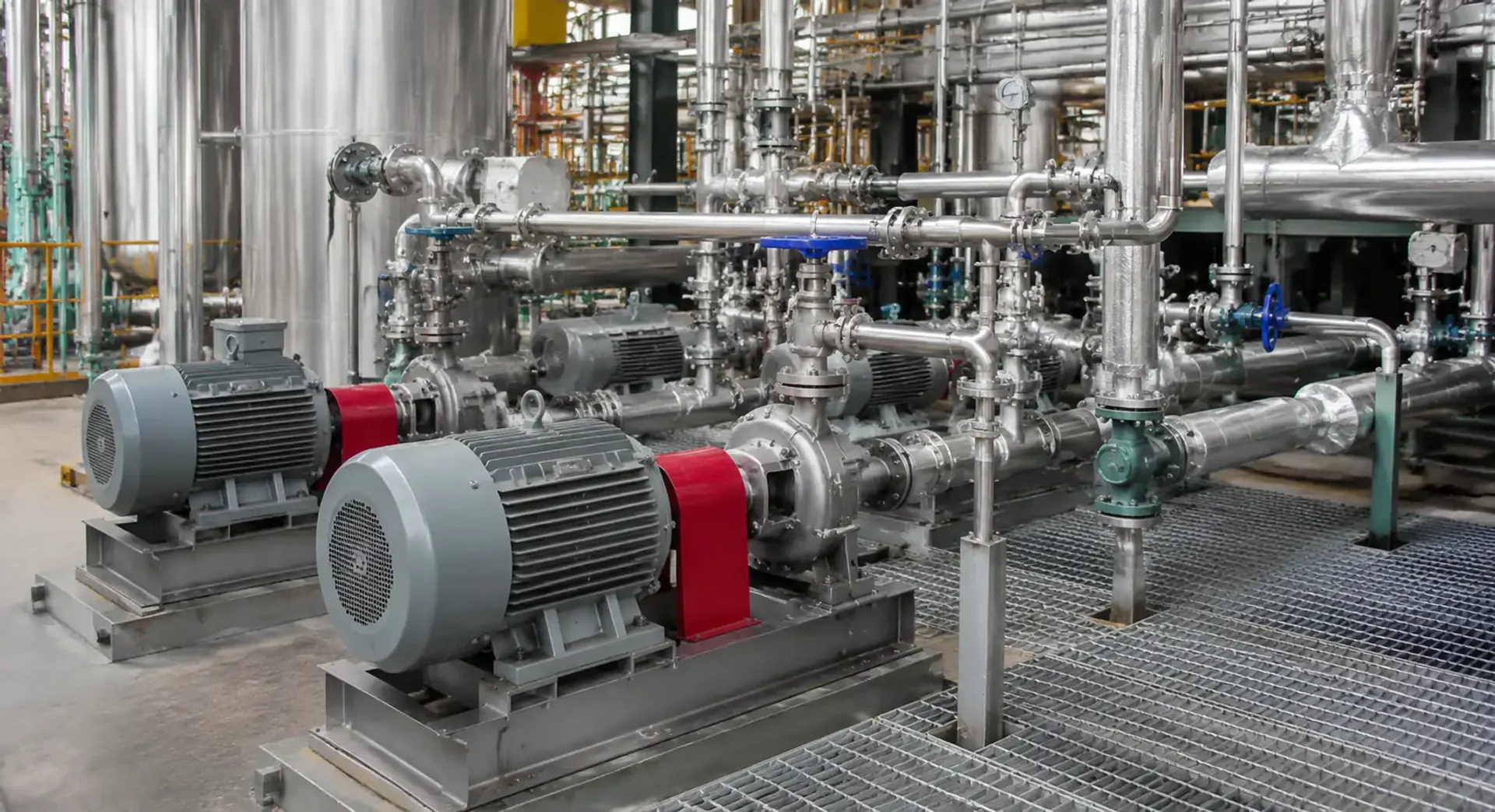
Chemical processing plant pump system with stainless steel piping and instruments

Typical High-Pressure, Low-Flow Chemical Services

Feed to Pressurized Reactors and Vessels

Liquids charged into reactors or vessels operating under pressure need a pump that can hold discharge pressure over the feed range.

Spray and Atomization

Pressure nozzles in spray dryers, scrubbers and coating lines need stable pressure to keep droplet size consistent.

High-Pressure Cleaning Water

Cleaning of vessels, exchangers and lines can require water at high pressure and modest flow.

What Makes These Duties Difficult

Corrosive Fluids

Composition, concentration and contaminants decide the wetted materials for the rotor, pitot tube and casing.

Changing Properties

Viscosity and density can change with concentration, temperature and batch recipe, which shifts the operating point.

Leakage Control

Hazardous or toxic fluids require a suitable seal arrangement and plant-approved containment.

How a Pitot Tube Pump Fits Chemical Processing Duties

For suitable chemical duties, a pitot tube pump gives high head in a single stage and steady flow to nozzles or pressurized vessels. Material compatibility and seal selection are confirmed against the safety data sheet and plant standards before a pump is proposed.

Learn how pitot tube pumps work, or review the high pressure low flow pump selection data. If the installed unit is a Roto-Jet® pump, see the Roto-Jet pump replacement process and replacement parts supply.

Data to Send With Your Inquiry

Start with the minimum, normal and maximum flow, suction and discharge pressure, fluid, temperature and viscosity, plus the current pump model and curve if a unit is being replaced. For chemical service, attach the safety data sheet, composition and concentration range, temperature, viscosity across the batch range and any containment requirements.

Send Operating Conditions

Other Industries

Frequently Asked Questions

How are materials chosen for a chemical process pump?

Materials are checked against the complete composition, concentration, temperature and contaminants, using the safety data sheet and plant material standards.

Can a pitot tube pump feed spray nozzles?

Yes, where the nozzle pressure is high relative to the flow. Steady, non-pulsating discharge helps keep atomization consistent.

What should be sent for a chemical pump inquiry?

Send the safety data sheet, flow range, suction and discharge pressure, temperature and viscosity range, seal and containment requirements, and existing pump data if replacing a unit.

Discuss Your Chemical Processing Pump Application

Send your duty range, fluid data and current pump details by email or WhatsApp.